Why audiobooks are the watch hours niche
From 1 February 2027 a new channel needs 1,000 subscribers plus 8,000 public watch hours inside 365 days. That is 480,000 minutes, and choosing a niche comes down to how many of those minutes one view hands you. Channels already in the program keep their place, but they must accept the updated terms in YouTube Studio by 31 January 2027.
This is scenario math, not a promise. A 12 minute video watched at 40 percent gives 4.8 minutes per view, so the door is about 100,000 views. A 45 minute audiobook chapter where the average viewer stays for 11 minutes gives 11 minutes per view, so the same door is about 43,600 views. Your retention will differ, but the shape of the arithmetic will not.
The listening happens where ordinary videos never reach, the commute, the kitchen, the hour before sleep, and the viewer does not need to watch the screen, which is why they stay. No author to pay, no camera: the niche looks like free money. Below are the three places where it stops being free.
Public domain is a map, not a date
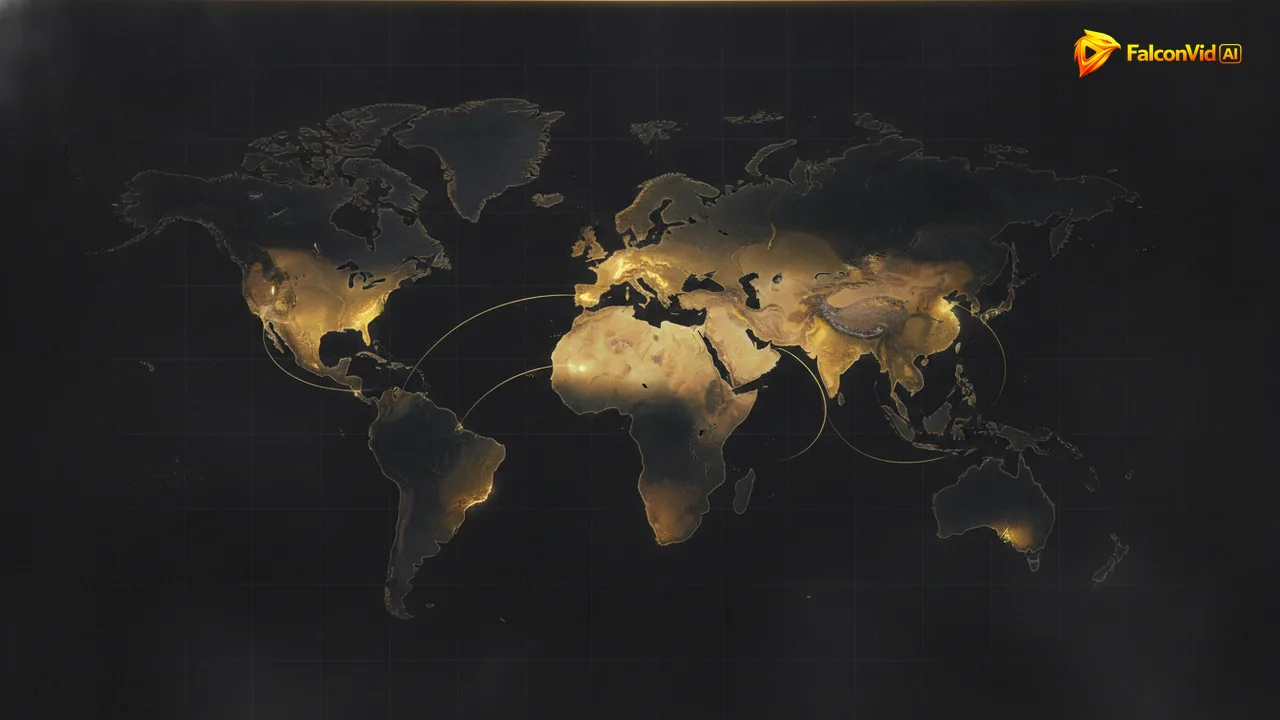
Everyone asks when the author died. The question that decides your channel is in which country, because copyright terms are set country by country and the same book can be free in one market and protected where most of your viewers live.
The map produces cases that look contradictory. George Orwell died in 1950, so his work has been free in Brazil and most of the European Union since 2021, yet in the United States Animal Farm, published in 1945, stays protected until 2041, because American terms for that period count from publication. Agatha Christie is the reverse: her novels published up to 1930 are free in the United States, while in most of the European Union, where the count starts at her death in 1976, they stay protected until 2047.
A channel that earns worldwide should choose works that are safe in its main markets, not only where the channel was created. Jane Austen, the early Sherlock Holmes stories of Arthur Conan Doyle and Dostoevsky in the Constance Garnett translations from the 1910s clear the United States, Brazil and most of Europe at once. This is general information, not legal advice: check the rule of your main market for each title before you plan a year of chapters.
- United States: works published in 1930 or earlier are public domain as of 1 January 2026, and one more year opens every January
- Brazil and the European Union: life of the author plus 70 years, so authors who died in 1955 or earlier
- Spain: authors who died before 7 December 1987 get life plus 80 years
- Mexico: life plus 100 years, the longest term in the world, though it did not pull back authors who were already public domain there
The translation trap: the book is free, your copy is not
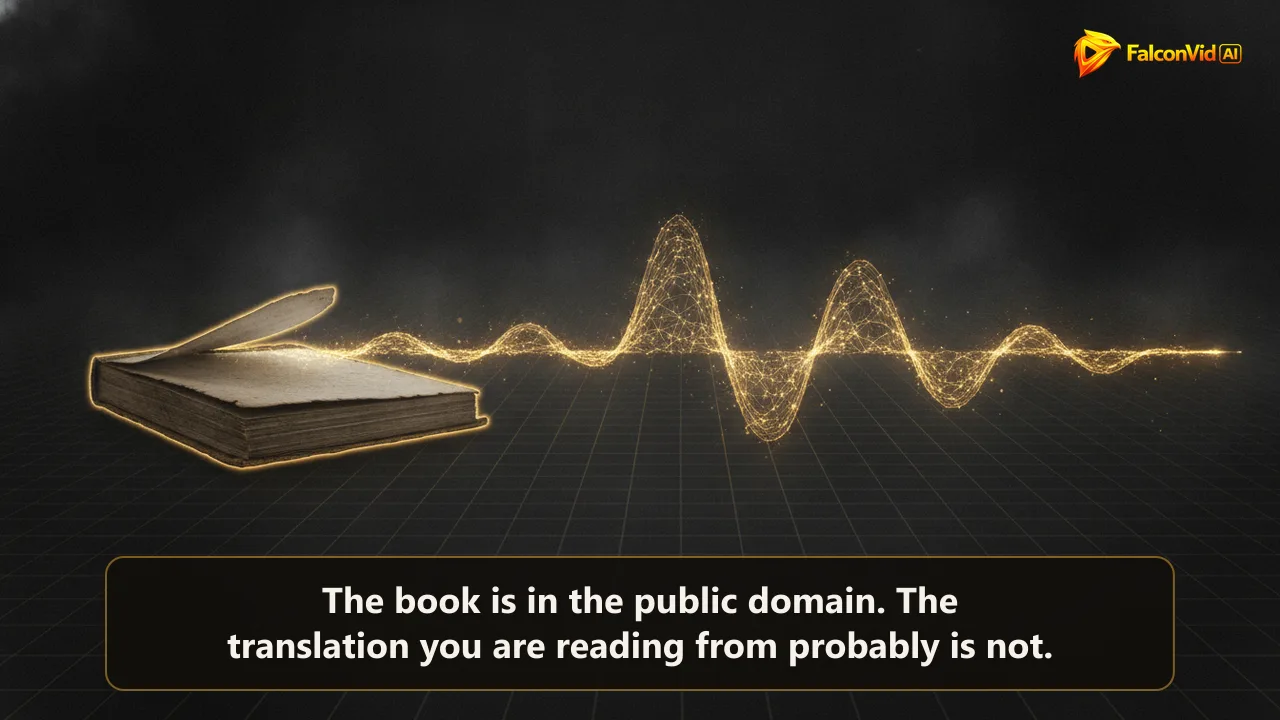
This is the turn almost nobody sees. The author's text can be public domain while the edition you downloaded is not. A modern translation is a new work with its own copyright, and so are a new introduction, the footnotes, the glossary and an editor's selection of which stories go into a collection. Narrate any of those and you are narrating someone who is very much alive.
Dostoevsky died in 1881. The Garnett translations are public domain too. A translation of the same novel published in 2004 is protected, and it reads more smoothly, which is exactly why people copy it by accident. An annotated Jane Austen works the same way: Austen is free, the scholar's notes at the bottom of the page are not.
Project Gutenberg is a good source, but read its license once. The text is free, and if you are not following its trademark terms, the license asks you to remove the Project Gutenberg name and the license text. We covered the same packaging problem in our book summary channel guide, and the rule carries over: take the old text, leave the new packaging.
The safest path: narrate the original language text, where the only question is the author's own term, or make a new translation from the public domain original, which becomes your own work.
The format YouTube demonetizes is not the audiobook
On 15 July 2025 YouTube renamed its repetitious content policy to inauthentic content. The target is mass produced material, template videos with little variation and slideshows that repeat the same narration pattern. Put that next to a typical audiobook upload, one static cover, one voice, nine hours, and it matches almost line by line.
The second trap is LibriVox. Its recordings are public domain, so they look like free inventory. They are free, but they are not yours, and the same recording already sits on hundreds of channels. Reuploading it is reused content, whatever the copyright status.
What reads as added value is concrete: your own narration, a short context intro on each chapter saying who wrote it, when and why it still matters today, illustrated scenes that follow the text instead of one frozen image, and a curated series with a reason to exist, such as the first Sherlock Holmes novels in publication order.
Scenes are the hard part, because a novel from 1887 has no footage and no press images. In FalconVid the engine generates each scene from the text itself, so chapter four gets the foggy street that chapter four describes, not a stock photo of a library.
Nine hours of the same voice
Normal speech runs at about 150 words per minute, and audiobook narration usually sits between 150 and 160. A novel of 81,000 words is therefore about 9 hours of finished audio, and nine hours is where a voice that sounds fine for three minutes starts to wear on the listener.
Monotony shows first in dialogue. When two characters argue in the same voice, the listener loses track of who is speaking and leaves. Multi character narration gives each speaker a distinct voice, and when that beats a single narrator is covered in two voices against a single narrator.
The other route is identity. A channel known for one narrator keeps listeners from one book to the next, and that narrator can be you without recording nine hours: see how to clone your voice for YouTube. Whatever the voice, check old names and places before chapter one, because a mispronounced Raskolnikov in minute two costs trust for the next nine hours.
Music is the layer most channels get wrong. Over nine hours, a bed that is slightly too loud becomes the reason people close the tab. Keep it far under the voice, using the levels in background music volume behind narration.
One nine hour file or twelve chapters
The instinct is to upload the whole book as one video. In practice a nine hour file is a single retention curve, almost nobody finishes it in one sitting, and people who come back have to find their place again. Many don't.
Chapters as episodes change the math. Each chapter is its own search entry and its own playlist item, so one book opens twelve doors into the channel instead of one. The viewer who stopped at chapter three comes back for chapter four, which is exactly the habit a channel wants. And mid roll ads can run on videos of 8 minutes or more, so a 45 minute chapter still carries ad breaks.
Length is a choice, not a limit. FalconVid has no video length cap for narrated videos, so a novel can become 45 minute episodes and a short book a single three hour video. Longer videos also cost less per minute, because fixed costs are spread over more runtime.
What FalconVid does with a chapter
You paste the chapter text as the script, and the narration reads it as written, with no summary and no rewrite of the author. The voice is an ultra realistic premium voice or your own cloned voice, in 63 languages, with distinct voices for the characters when the chapter has dialogue. The voices are on the AI voice narration page.
Around the narration the line builds the rest of the video: scenes generated from the text, karaoke captions in more than 15 styles, the thumbnail and the video SEO with title, description and tags. Publishing goes to YouTube, Instagram, TikTok, Rumble and Facebook at the time you approved on the calendar, and true autopilot builds the video before the scheduled time.
Production runs in parallel: an AI researcher, scriptwriter, narrator, editor and sound designer work at the same time. Simultaneous generations go from 2 on Starter to 5 on Pro, 10 on Business, 25 on Agency and 50 on Scale. You see the credit cost before generating.
When one scene is wrong, the Studio lets you watch V1 and fix that scene without regenerating the chapter. And once a book works, you duplicate the project into another language paying only the difference. Because that version comes from the public domain text you pasted, the translation is your own new work, not a copy of a protected edition.
What a whole book costs, by hand and on the line
By hand, professional audiobook narrators commonly quote $150 to $400 per finished hour, and a common industry rule of thumb is around 6 hours of work per finished hour, counting narration, editing and proofing. A 9 hour novel is $1,350 to $3,600 for the voice alone and about 54 hours of work, before a single scene, thumbnail or upload.
On the line, the same novel as 12 chapters of 45 minutes in economy is 5,145 credits per chapter and 61,740 in total. A one hour chapter is 6,695 credits in economy or 21,187 in balanced, and a three hour video in economy is 19,110.
Per plan, in 45 minute economy chapters: Starter for 15,000 credits fits 2 one hour chapters, Pro for 30,000 fits 5, Business for 95,000 fits 18, about a novel and a half a month, Agency for 190,000 fits 36 and Scale for 320,000 fits 62.
So the conclusion has two tracks. By hand, one narrator finishes maybe one book a month, in one language. On the line, the limit becomes a number you pick in the plan, from 1 to 50 channels and from 2 to 50 simultaneous generations, with the same book in as many languages as your markets need. You can see the whole line on the FalconVid home page.